
When Art Turned Perception
When the painting “Komposition V” by Wassily Kandinsky was exhibited at the Neue Künstlervereinigung München (NKVM) exhibition in Munich in 1911, abstract art was born. It was a moment in history when painting received a new definition. In this new definition, art is freed from the obligation to visualize the known world. It turns inward and begins to speak of feelings. I will not forget Hilma af Klint, who worked in abstract art before Kandinsky, but that is a topic for another article.
What follows from this historical moment is a radical shift in artistic logic. Abstract painting does not visualize the world; it visualizes experience. Instead of describing objects, it constructs relationships among color, line, surface, and rhythm. Meaning is no longer anchored to recognition but to perception itself. The painting becomes autonomous, governed by its own internal logic rather than by external reality.
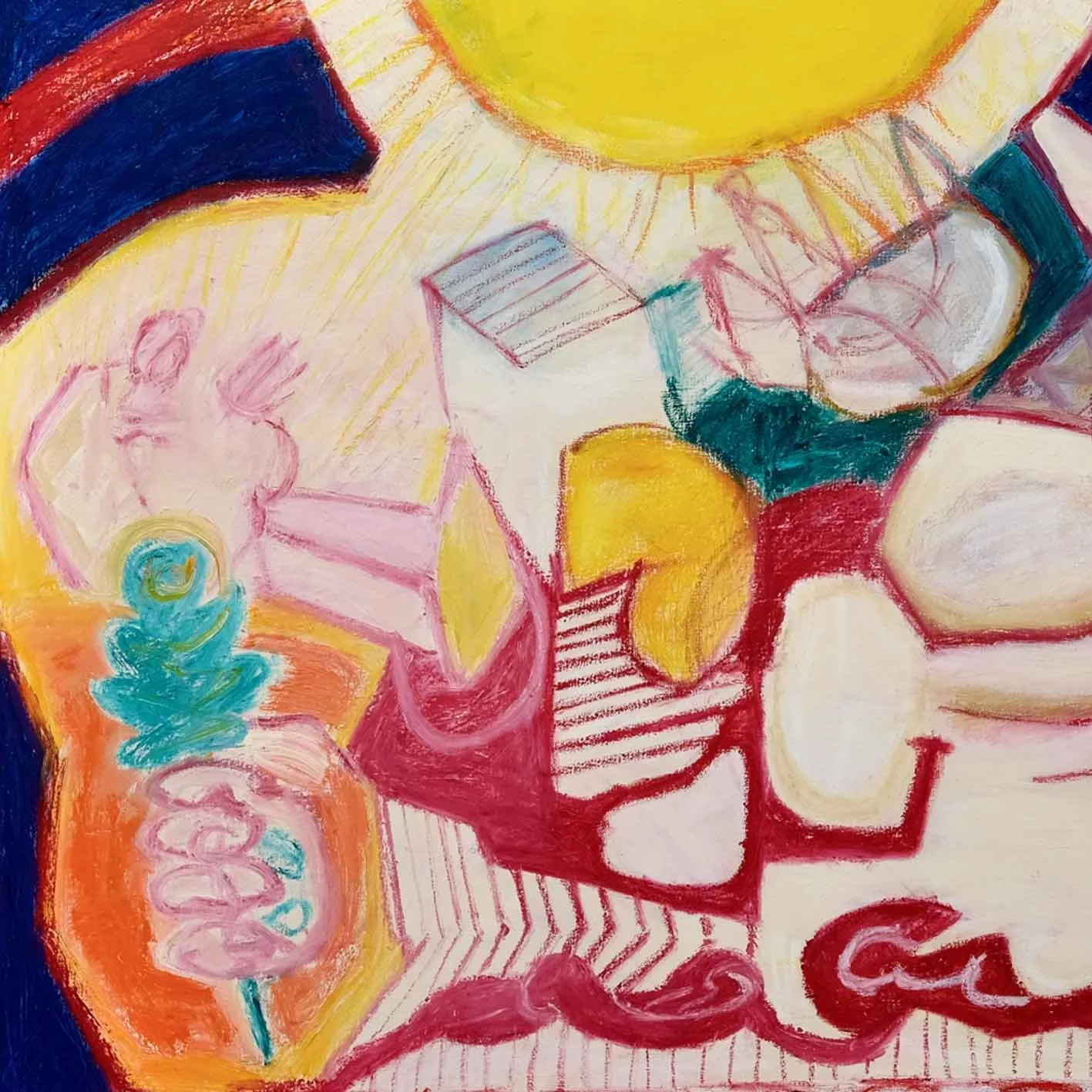
Building on this evolution, as discussed in our previous text, abstraction is often misunderstood as a lack of meaning or as visual chaos. Each element must function within the totality of the work. Abstraction is therefore not the absence of order, but the creation of a different order.
This shift also transforms the viewer’s role. The encounter with artwork becomes experiential. Abstract painting marks the moment when art stopped mirroring reality and began constructing its own. By refusing imitation, abstraction asserts that reality is not only what is visible but also what is felt.
The Unique Art Gallery celebrates January as the Month of Abstract Painting, a time when art stopped imitating reality and began creating its own unique world.